
Hospitality Marketing Lab · with Eduard Ruppel Hotel SEO tips: why great hotels look bad online
Eduard Ruppel, founder of Leppur Marketing and a hotel operator for over 20 years with Aman, The Peninsula and Radisson, talks with Daniel Laurean about hotel marketing in the AI era.
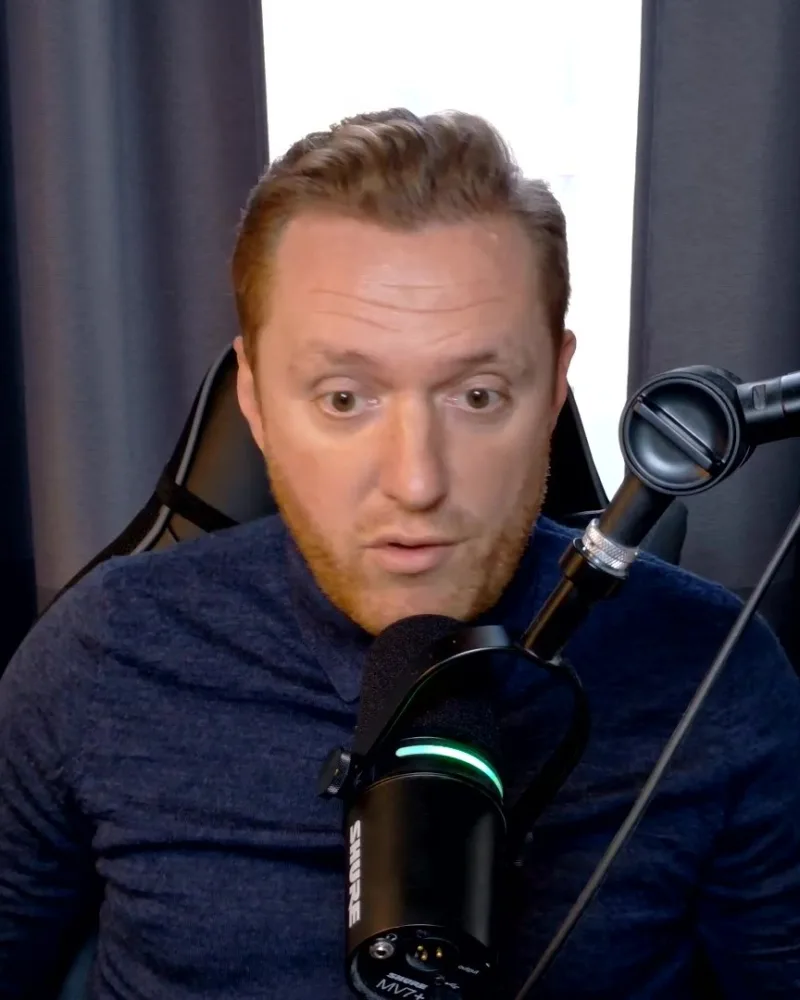
Watch the episode · 39 minutes · 32 chapters
In this episode
Many hotels lose guests before anyone reaches the lobby. Eduard Ruppel joins Daniel Laurean to talk about why great hotels look so bad online and what to fix first: the website as a digital lobby, friction in the booking journey, room pages that AI assistants recommend, and why every fact about your hotel has to match everywhere online.
Five hotel SEO tips from Eduard Ruppel
Treat your website as your lobby
Your website is your digital lobby, and more people will visit your digital lobby than they will ever come to your original lobby.
Eduard Ruppel, 2:38
Write room pages that answer real questions
Eduard’s team rebuilt one room page with about 1,800 words and 69 FAQs, based on what housekeeping, the front office and the engineers said guests ask about.
It was indexed within 48 hours, and within 48 hours ChatGPT recommended this family room directly.
Eduard Ruppel, 14:14
Put your location in the H1
You need to put the location in the H1 header, which is the most important header.
Eduard Ruppel, 16:54
Don’t skip YouTube for ChatGPT
You can get more traffic … from YouTube than you can get from ChatGPT. We see the numbers with our clients.
Eduard Ruppel, 24:07
Make your facts match everywhere
Opening hours, the number of rooms and every other detail should read the same on every site that mentions your hotel.
If you have 98 rooms, make sure it’s everywhere 98 rooms. This is work, but you need to do it, because otherwise AIs are confused.
Eduard Ruppel, 38:23
Quotes are as spoken in the episode, with filler words such as “you know” left out.
About Eduard Ruppel
Eduard Ruppel is the founder and managing director of Leppur Marketing, a hotel SEO agency for boutique and independent hotels. Before that, Eduard spent more than 20 years in hotel and restaurant operations across Asia, the Middle East and Europe, with Radisson, Aman, The Peninsula and Kurumba. Find Eduard on LinkedIn.
Related on resaco.co
From the episode
Questions answered in this episode
The hotel’s location. Eduard’s advice is to put where you are in the H1, the most important heading on the page, so Google and AI tools can tell straight away what kind of hotel you are and where (16:50).
No. Asked for the most overrated tactic, Eduard named jumping into GEO without proper SEO, and called local basic SEO the most underrated. Eduard also sees very little hotel traffic coming from ChatGPT so far (23:43 and 36:02).
Ask to see the clients they work with, recent case studies and results (client names can be masked) and the web pages they have built. Then ask who else they work with: an agency that serves hotels today and a tyre shop tomorrow may not understand your business (32:08).
Keep every fact the same everywhere online, from opening hours to the number of rooms, and check what people say about your hotel and your city on Reddit. Conflicting details confuse AI tools, and they end up giving out wrong information (37:40).
Because the Google Business Profile doesn’t belong to you. As Eduard puts it, it is rented to you from Google, and a guest who leaves a review is Google’s customer too. Eduard describes an 85-year-old guest whose long review, with photos, never got a reply (27:14).
Free 45-minute analysis
Want a second opinion on your hotel’s website?
We look at your booking data and your website with you and tell you what we would fix first.
Full transcript (lightly edited)
0:00 Intro
0:59 Meet Eduard Ruppel
Daniel Laurean: We have actually been recording for the last three minutes, but I think we can officially get this thing started. And what better way than to talk to somebody with the experience that you have, Eduard. You’ve been all over the place. You have worked in operations. I also come from the operations side, from a different area, but I think there’s a lot of overlap in the things and the work that we are doing.
The one thing that I’m curious about and want to get started with is this: you talk a lot about how you have seen a similar pattern in Berlin, in Beijing and in the Maldives, excellent properties reduced to thin listings,
1:32 Great hotels, weak online presence
Daniel Laurean: losing to louder competitors. What was it that gave you the light-bulb moment that, okay, this is a problem that I need to address and I need to start helping the hospitality industry?
Eduard Ruppel: Yeah, thank you. Thank you. Yes, you’re right. I was working in a couple of countries in this world, you know, with beautiful properties. But again, what I see online… Because when I was running operations, in my free time, while others were watching Netflix, I was building web pages, you know. I was doing SEO and everything like this for myself.
So what I always see is amazing properties offline, fantastic service, you know, really great reviews, everything. But once you go online, the ball drops so hard. It’s unbelievable, you know. So there is still the mindset: okay, as long as we are good offline, that’s fine. But actually the guest journey now, we are in 2026, the guest journey starts online first. And then if you’re lucky, those people that find you online will come offline to you, you know.
So I always like to say your website is your digital
2:38 Your website is your digital lobby
Eduard Ruppel: lobby, and more people will visit your digital lobby than will ever come to your original lobby, you know. We always take care of the lobby, you know, we always maintain it. In the evening the cleaning crew is coming to polish the marble. Why don’t we do the same with the website? We have to do the same with the website, you know. And this is where they are missing out, you know.
Daniel Laurean: Yeah, absolutely. I think you hit the nail on the head. Why do you think that particular pattern has emerged? Look, one of my theories is that we’re now involved in the digital marketing space, and while it’s a very saturated industry, it has also come to have a bad reputation through malpractice, right?
3:30 Why hotels start at step three: OTA dependency
Daniel Laurean: Something that I see a lot when it comes to hotels is that they kind of start at step three, talking about advertising and how they can get direct bookings, but never really looking at the foundation. From your experience, Eduard, what do you think are the right steps to take into consideration to fix those particular issues that you just mentioned?
Eduard Ruppel: Well, first of all, just to go back to why I think we are here: first of all, it’s OTA dependency. Absolutely, OTA dependency for so many properties. I understand why OTAs are there, they need to be there. But at the same time, if your business only relies on OTAs, you have no business, because they change the rules tomorrow and from page one you’re on page 20 suddenly, you know. It can happen. It absolutely can happen.
So that’s why I’m always saying, you know, use OTAs, but also be very, very hardcore marketing your direct booking channel. This is absolutely important. You need to create your direct booking channel and you really need to take care of it. OTAs are there, you know, they will bring you the business, that’s not a problem. But how much value do you have from a direct booking client versus an OTA client? You have way more value from a direct booking client, you know.
So that is when you take care. Then of course, in this digital marketing business there are a lot, a lot of agencies that just do bad work, I have to say that, actually,
4:48 Why hotels need hospitality-specialist agencies
Eduard Ruppel: that do not understand the hospitality industry or how a GM or a director of sales and marketing is thinking, you know. They’re sending them, you know, five times a day: “Please follow up on this”, “Please follow up”. People don’t have time. You really need to understand how a hotel operation is working, you know. What is a boutique hotel? What’s an independent hotel? There are different nuances which you need to understand.
And I think that’s why you need to work with agencies or people that worked in hotels or have hotel experience, and this way it makes a difference, you know, absolutely. If I have something with my heart, I’m not going to a normal doctor, right? I’m going to a heart doctor, right? It’s the same. If I’m in the wrong place, he will tell me, “You’re at the wrong place.” So that’s why. You see, so many are actually delivering better results for hotels, you know. Especially if you look at how websites are designed: they are beautiful designs, but without any
5:46 Beautiful websites with no SEO
Eduard Ruppel: SEO, because those agencies only know how to design, but they have no clue about SEO. So now you as a property: oh man, now you need to find somebody to fix your SEO, you know. At least go to one agency that knows design, that knows SEO, that knows, I don’t know, TikTok advertising or whatever, and there are agencies out there, you know. And look for some that are specialised in hospitality, you know. So that’s the thing.
Daniel Laurean: Yeah, yeah, I think that’s perhaps one of the first fundamental steps. You mentioned that you should be treating the website as your own lobby. It’s your digital lobby. So obviously, whenever you go into a luxury hotel, right, from a well-established brand, your check-in journey is actually quite flawless, right? Very frictionless, top-notch service.
So that should have the same effect on the website as well. And that’s something that I think we can both agree we have seen perhaps countless times: the website will be very nice-looking, yes, great imagery, but the booking journey itself,
6:48 Why the hotel booking journey is so painful
Daniel Laurean: it’s a complete hell, right? Why do you think hotel owners and GMs fall into that particular mistake when deciding to go with an agency?
Eduard Ruppel: As I said before, I think they are really very busy with operations, running the hotel, meetings, marketing. They really don’t have this hotel online head, I would like to say, you know. They’re wearing many hats, you know, but no one on the property is really wearing this online hat, to really be on top of it: what is the new trend, what’s going on and everything like this.
And if you look at a lot of booking engines on websites, so many are just bad, you know. You click on the link, you are getting redirected to a totally different website. The booking page has nothing more to do with your website. It doesn’t look like your website. So this is already a big friction. Why don’t you use a booking engine that lets you stay on your website? You can design it and it actually looks like your hotel, you know.
This is very important. Or please make sure that if I press “Book now”, it’s actually working as well, you know.
8:06 Choosing a booking engine for a boutique hotel
Daniel Laurean: Yeah, yeah. Yeah, of course.
Daniel Laurean: Obviously the booking engine is one of the most important things, but it has to be the right booking engine for the right type of property. And of course, just to be clear, we’re not sponsoring any booking engines here, but speaking about independent boutique hotels, what do you think are the ones that are performing best at the moment and that provide a good solution for those types of properties?
Eduard Ruppel: Not sponsored by anything, but I really like two: […] Those two are very, very good in my opinion, you know. They really do a very nice set-up for the booking engine that lets you stay on the page, you know. You can really design it how you want it, you know. So those two, I’m a really big fan of those.
Daniel Laurean: Yeah, we have also had very good results with those two. Something that we have seen as well, and I think it’s highly important whenever it comes to building a website, is how flexible those tools are in allowing you to actually edit the website, right? I know that there are solutions out there that kind of want to give you everything in one package, but obviously that can be costly in the long run.
Are those things that you also consider GMs and owners should be aware of whenever they’re choosing a booking engine? Should they separate the booking engine from the website development?
Eduard Ruppel: Yes, yes, yes, because first of all… I mean, yes and no. If you choose one of those two, you can integrate it directly, properly. But if for whatever reason you cannot, then you need to make sure, okay, listen, I have a very, very good website, you know, and then for whatever reason I will choose a booking engine that maybe doesn’t let me stay on my website, but I can still communicate somehow with them, you know.
But ideally, of course, ideally you must integrate both, you know. But we see so many that cannot. I don’t know which kind of contracts they have, but they just cannot have the booking engine that lets you stay on the page properly, you know. So yeah.
10:13 Tracking the booking journey in GA4
Daniel Laurean: Yeah. Why is it important for the GMs and for the owners to have those kinds of things segmented?
Eduard Ruppel: Well, first of all, if we really look at booking engines, right, you need to connect your booking engine with your Google Analytics, with your GA4, Google Analytics 4. You need to monitor your tracking buttons to really see: okay, where is the booking journey? Where does the booking journey drop off? Which buttons are they really clicking? How is the whole booking journey, you know? If you don’t separate it, then you cannot really follow it properly, you know.
So let’s say you have a booking engine that lets you stay on your web page and everything like this. It’s easy, you know: you integrate it, you click, you create your UTM codes, you can follow everything. But if a booking engine doesn’t let you stay, you know, then you rely on them to give you the right data. And do they really give you the right data properly? Many times I’m not sure, you know, if they really give you the proper data.
So if you separate it, you really need to say, okay, I need everything from Google Search Console, from Google Analytics, and now I have to combine the data, you know. So that’s a big friction there, you know.
Daniel Laurean: Yeah, and I think these are the kinds of topics that are important to mention for the GMs out there and for the owners, because they may be very savvy about running the business, about running the hotel, but then there are all these little technicalities. Yes. They don’t need to be experts in them, but at least they need to be aware, right? Yes. Why it is important that we are actually suggesting those kinds of changes, suggesting those kinds of systems to put in place.
Moving on a little bit to how guests are actually choosing hotels, so
12:04 How guests choose a boutique hotel today
Daniel Laurean: how do you see guests actually choosing a boutique hotel today? Is it Maps, the Google Hotel Pack, Instagram, OTA reviews? Talk to me.
Eduard Ruppel: It’s all together. It is all together, and you as a boutique hotel really need to be on top of each channel nowadays. It’s not like it was before, you know, when you could just go on it. Now you really, really need to be on top of each channel. Your website, and I stand by it, is the number one channel you have, you know, of all these channels.
Let’s say now in the US: Google in the US is totally different from the rest of the world at the moment, because now AI Mode is first, you know. So when you look now, you have a totally different insight than when I look for a property in Southeast Asia, you know. Now, what do you need to do on your web page? You need to make sure your web page is first of all designed properly for humans, and then as
13:01 Designing your website for humans and AI
Eduard Ruppel: well for AI. What does it mean? Okay, you give all the information people would like to find on your website. And then if you have it done properly, AI finds it as well and can recommend you. But if I now do a prompt to ChatGPT: listen, I’m going to Barcelona, I need a family room, you know, I need at least 120 square metres because I feel good, you know, I have to celebrate, you know, I need two bathrooms and everything like this.
If you do not have it on your property page, your room page, how do you want to get recommended? You cannot be recommended, and this is what we see. But you go to hotels, all nice:
13:43 150 words for a two-floor junior suite?
Eduard Ruppel: “We have a nice junior suite over two floors,” but they describe it with only 150 words. I mean, come on, 150 words for a junior suite on two floors. You have nothing more to tell? That’s ridiculous, you know. I mean, that’s ridiculous. I’m not sure if you have read my newsletter last week. We did a test where we structured the
14:02 The room page ChatGPT recommended in 48 hours
Eduard Ruppel: room page for one of our clients. A proper rooms page, how it should be done. It has around 1,800 words, you know, you don’t need to go that far. We have 69 FAQs created, you know, you don’t need to go so far. But man, it was indexed within 48 hours, and within 48 hours ChatGPT recommended this family room directly. Done, you know, because this is what they need now.
We did the test with the owner, because the owner always said, “No, Eduard, I see no one else is doing this, forget it.” And I said, “Let us do a test, please.” So we did the test, and now he’s doing all his room pages like this, because he sees the results, you know. Exactly, exactly. We explained everything, you know, we explained everything that is in the room. How is the bedding for the kids, how many beds they have, how thick is the mattress? What is the sheet, what is it made from, you know?
How many bathrooms, how many toilets, what is in the minifridge? Everything. How close are you to this attraction, how close are you to that attraction? And if you as a guest go to this room page, you read everything: “Oh shit, I want to book this room.” But AI, you know, is choosing your room because you have everything that you need there, you know. So that’s the reality nowadays if you really want to show up in AI properly, you know. So that’s it.
Daniel Laurean: Yeah, exactly. So I think this is something very important to mention, because obviously lately all you hear everywhere is AI, AI agents, AI, GEO,
15:25 SEO vs GEO: where hotel traffic comes from
Daniel Laurean: etc. There are all these AI solutions, but bring it down a little bit to the SEO part, to the website, to getting new customers and new guests, right? It seems to me, or based on the conversations that I’m having as well, that there’s a lot of thought being put into how we can improve on ChatGPT, how we can improve being cited in all these LLMs, where in reality at the moment there’s not a significant amount of traffic coming to hotels from them. At least not yet. Not yet, right?
And they’re completely forgetting about SEO. So I think there’s this belief that somehow we have to create content for the human and for the machines as well, which to some extent I think is true, but it shouldn’t be treated as something completely separate, but as something that is merged together. Talk to me a little bit about that. What are the things that, by taking care of the foundation from the SEO perspective, take care of the GEO side on their own?
Eduard Ruppel: The most obvious one: I’m not sure how many web pages you are looking at daily, but if you open many web pages, they say “Welcome to the luxury escape” or “Welcome to the luxury boutique hotel”, but where? Hotels forget to put the location where they are, you know.
16:50 Put your location in the H1
Eduard Ruppel: So you need to put the location in the H1 header, which is the most important header. So then already, you know, AI and Google can tell, okay, this is a boutique hotel or a luxury escape or whatever, you are a vegan hotel, but you are in Barcelona or New York, doesn’t matter, you know. So ideally not only the name but as well the… how do you call it? You know, like the Bronx, New York Bronx, or how do you call it? I forgot the English name for it now, you know, the area.
Then of course in your meta description you also repeat where you are, that you are a boutique hotel and everything like this, you know. So those are the first things, and a lot of hotels just forget it, you know. They just absolutely forget to put in the basics. These are the basics. If I go inside your hotel, it will say, you know, “I’m the Westin Hotel” or “I’m the Rose Hotel”. It will not say, you know, “I’m just a hotel.”
This is very important to understand. And then of course, and this is what I would say, you need to be the local guide for your area, from
17:58 Be the local guide for your area
Eduard Ruppel: the hotel. So what does it mean? You have certain pages, you have a blog where you talk about your area. What is around you? How far away are you from… Let’s say you are in Paris: how far away are you from the Eiffel Tower? When do the lights go on? You know, when do the lights go on at the Eiffel Tower? I’m a tourist, you know, many are searching for it, you know.
And then if you have it on your website, they will find your hotel, and you increase the chances that they book with you, you know. You need to become the local guide, you know, because if you write nice content for the people, AI
18:36 Speed, technical SEO and mobile
Eduard Ruppel: will pick up on it, you know. So that’s the most important thing. Your website must be fast. Very important.
Eduard Ruppel: That’s just the basics. If you have a slow website, as we see so many times… I mean, come on, it takes ages to load your website, you know, it’s not good. You must be technically sound, you know, so that if I click on a link, you know, it opens the proper link, not that it’s a broken website or something like this, you know. You must be mobile optimised, you know, because many times it looks very, very nice on the desktop, but on mobile it’s just horrible.
Google says it’s mobile first, you know, and then desktop second, but I would take it with a caveat, because what we see in the reporting is that a lot of times desktop is dominating, you know. So sometimes it’s mobile, sometimes desktop dominates. So that’s why: never forget your desktop website, but also optimise it for mobile, you know. Absolutely important, you know.
So those are the basic things, you know. Those are the basic things. And then describe your hotel, you know: describe what you actually do, how you are different, you know, where you are, you know. Talk about your team on the page as well, you know. So it’s important, you know. Absolutely.
Daniel Laurean: Yeah, of course. And I think perhaps one of the biggest challenges for a lot of hotels is the differentiation aspect, right?
19:50 Why every hotel looks the same online
Daniel Laurean: Yes. I just had on the podcast last week a guy who does video production and photography for a lot of hotels, and one of the things he received as a comment was, “If I see another hot stone massage picture…” Another…
Eduard Ruppel: Absolutely, absolutely. So I mean, tomorrow my newsletter is coming out, actually, exactly about this topic. I mean, how funny. It’s about: if I remove the logo, if I remove the name from your
20:23 The remove-the-logo test
Eduard Ruppel: hotel, will people really understand, once they go to your website, whether it’s your hotel or not? Most of the time not, because most of the time everybody just follows the same pattern, the same thing, you know. But in reality, if we work in a hotel, we know our hotel by heart, you know. We know what makes us different and everything. Put this soul into your property online, please, you know.
It’s 2026, we are approaching 2027. It’s enough having static web pages from ’97, you know. So please, please, please, you need to evolve. You really need to evolve, you know. And the guy who’s doing the videos, I’m sure if he has another client who wants to do a hot stone massage, he’ll say, “Okay, come on guys, just take ChatGPT and do it by yourself.” Yeah, yeah, it’s so boring. It’s very boring. It is, you know,
21:13 Boutique hotels can test, chains can’t
Daniel Laurean: it is, it is. And I think it’s also playing it safe, right?
Daniel Laurean: The sort of competitor analysis that they do is just: let’s see what everybody else is doing and let’s just copy the same, let’s see if we can make it better, right? But precisely, maybe that’s not what people are looking for. People are looking for experiences. How well can you actually make them feel?
Eduard Ruppel: Yes, absolutely, absolutely. If you’re a boutique hotel, right, an independent boutique hotel, you don’t belong to the big chains that put you in chains: “You cannot change the button. You must first contact our regional marketing director to change the bloody button,” you know, which takes six months till this guy or the girl answers, whatever. You’re a boutique hotel, you can test, and you are so agile. You can test: okay, this is working, this is not working.
We change, adjust, and then you step up, you know. I’m not talking about those boring company pages, you know. Anyway, they are working like an OTA for themselves. But have you looked at those pages? They’re boring, man. They’re absolutely boring, you know. It’s boring to look at them. But I understand that they’re in a different business.
But if you are a boutique hotel, you have so much room to test, you know. You can really test what is working and what is not working, you know, not only on your website: social media, video, everything, you know. Everything, you know. Yeah, yeah, absolutely. I think at the beginning we talked about the arrival process, right?
22:37 The pre-arrival podcast idea
Eduard Ruppel: If you’re a very, very nice boutique hotel, why don’t you create a pre-arrival podcast for your people, you know? Once somebody books, the sequence goes out. The GM: “Hello, you booked a hotel room with us. I’m the general manager.” The GM explains from his soul, because he loves his hotel, what the hotel is about. Two days later the executive chef describes the kitchen as a podcast, you know.
Three days later the front office says, “Okay, listen, the check-in is like this.” Why don’t you create such a nice pre-arrival experience? So when I as a guest am there, I already know the hotel, you know. Maybe I already know some names, you know. But no one does it, you know. Everybody plays it safe, safe, safe, you know.
Daniel Laurean: Yeah, and I think it’s connected to the same mentality of using OTAs as a tool, right? It’s depending on the thing that they know somehow kind of works, without necessarily taking a risk and saying, okay, if I figure out this particular channel, this can actually bring me quite a lot of traffic. Something that I talk a lot about is YouTube, which is the second largest search engine.
23:43 YouTube vs ChatGPT for hotel traffic
Daniel Laurean: Yes. Why aren’t you making content for YouTube?
Eduard Ruppel: No, but look at the hotels. No one does it. Sometimes they do the same boring shots, you know. The birds are flying there and then one couple is drinking, I don’t know what, you know. It’s the same couple in another hotel. It’s the same couple again. It is like this, you know. It is so boring, so boring to watch. But YouTube is the second largest, you know.
You can get more traffic for a hotel from YouTube than you can get from ChatGPT. We see the numbers with our clients: the traffic is very, very little, and everybody talks about ChatGPT. No. Reverse engineer, see what’s going on, you know. That’s exactly it, you know.
Daniel Laurean: Yeah, because a lot of those blogs that are being created as guides, right, those can be turned into actual videos. Instead of writing it, create the video itself. So, stepping away a little bit from the don’ts, talk to me a little bit about the dos. What have you seen? What are some standouts that you have encountered where you took a risk, or the hotel took a risk, and it paid off exponentially?
24:50 Convincing an owner to take the risk
Eduard Ruppel: Just now, as I said, we did our test with the room page, you know, with the owner. It’s a very, very nice boutique hotel, very expensive. He was always complaining… not complaining, but he always told me, “Eduard, no, I don’t want to do this. I don’t want to do this. I see…” These are his words: “I see no one in the industry is doing this. So why should we do it?” You know, it took me three months to convince him to do it.
Then we did it, then he saw it, and he said, “Eduard, we change it everywhere. This is the contact from our design agency. We change it everywhere.” So for me that’s a big, big win, you know. Same for content. I asked him so many times, “Let’s write content, you know, on your website.” “No, Eduard, I see no one is doing it.” So then I showed him: “No, listen, Aman has a blog. This one has a blog. This one is similar.” “Okay, let’s start doing it,” you know.
So you really need baby steps, for me, you know. You really need baby steps to convince them, and once they see it, they see the results. Because so many just don’t want to do it, because they think it will hurt, but you cannot hurt it. You know, if you do your website properly, you do proper content, everything, you cannot hurt yourself. I’m not telling you to quit OTAs or quit this channel. No, no, stay there, but push there as well, you know, and then you will have a better mix of everything, you know.
And then Google Business Profile, you know. I’m still astonished
26:11 Google Business Profile posts: free views
Eduard Ruppel: how hotels just create a Google Business Profile and just leave it alone. But if you notice the updates, the posts: we see it with our clients, four thousand views for a post, five thousand views, three thousand views. It’s free advertising, free marketing for you, and you’re not using it. Are those three thousand views really clicks and clients? No, but people are watching, people are reading it.
So why don’t you use it to promote your hotel, to promote your brand, whatever it is? Do it, do it, you know. But people just don’t do it, you know. “Why do we need to create a post?” Because people are watching it, you know. People are looking at it. And now finally, since three weeks, it’s live: Google really shows you how many views those posts actually have. I was astonished. I knew already before that we have views, but not that many, you know. I was surprised by it, you know.
Daniel Laurean: Yeah, yeah. Yeah, absolutely. You kind of beat me to the punch. I was just about to ask, you know, what do you think are the three main things that a lot of hotels get wrong about
27:14 Not replying to reviews: shame on you
Daniel Laurean: Google Business Profile?
Eduard Ruppel: Not replying to reviews. Bloody hell. Sorry. I see so many hotels. I just audited one hotel. There is a lady, 85 years old, she went there with her husband on vacation. She wrote a long paragraph, a long paragraph, nice pictures, and this hotel doesn’t have the courage to reply to this 85-year-old lady. Shame on you. Come on. I mean, look at this. Look at this.
I research the hotel, right? I come to you. You take my money, you know, you take care of me. In my free time I’m making nice pictures of you. When I fly back, in my free time I write a nice review about you, right? I share it with you, and you as a hotel don’t reply to me. Man, get out of business, you know. Really, get out of business. We’re in hospitality.
When I was working in hotel operations, when a guest stopped me, I always had a chit-chat with the guest, you know. I never said, “Oh no, I have no time.” You always talk. So why do you treat it differently online? I would even say you need to treat it even better online, you know. You need to reply properly. You need to do those things, you know. But if you don’t reply, really, shame on you, shame on you.
Because don’t forget, the Google Business Profile does not belong to you. It is rented to you by Google. And once a guest replies on a Google Business Profile, it’s not only your guest but also Google’s customer, right? So Google wants you to take care of their guests. If you don’t reply, what does it send to Google? “You don’t care about our clients.” This is the thing that a lot of people need to understand, you know.
So I cannot see it, you know, if they don’t reply to comments, you know. How can you not do it? If you are too lazy or you have no time, there are so many solutions out there that can do it for you. Exactly, exactly. But not replying, it’s not an excuse for me. It’s really shameful, really. And we always talk about how we are in the hospitality business. Hospitality, you know. Where is it?
29:24 Ask housekeeping and the front office
Daniel Laurean: I was just about to say that. I think there’s a big disconnect between
Daniel Laurean: the people that are running the hotels versus the people that are actually in the day to day. We both come from operations, right? And sometimes the best insights you can actually get are from people that are in the operation itself. Yes: what are the customers actually enjoying? What are the customers actually complaining about? So yes, they do have all the tools at their disposal.
It’s just a matter of taking the time to want to actually find out what it is that the guests actually want, absolutely, instead of trying to add another AI chatbot that is promising you it’s going to bring you all the guests in the world, right?
Eduard Ruppel: Yeah, absolutely. And this is how we came up with the last room result, the room test with 69 FAQs, because we sent an audit to housekeeping, front office, engineering, everybody: “What do you think about this room?” Each, you know, has their own niche: how front office, how housekeeping and engineers are thinking, you know. The engineer told us, you know, “Actually, our windows are triple insulated. You cannot hear it, even though we are in the middle.”
It was nowhere written on the website, you know, but this is something very, very cool. If you are a light sleeper and you go to a city hotel, you would be happy to know that the windows are triple insulated. You sleep very nicely, you know. Housekeeping said, you know, “Our mattresses are so nice,” you know, blah blah, you know. It’s unbelievable.
You need to ask your people that are at the front office or wherever: what are people actually asking about the room? What do you answer to them? You know, and then you have your content, you know. How much content you have for your website and for your videos! But somebody needs to be in charge of it, you know. Somebody really needs to be in charge of it, you know.
Daniel Laurean: Yeah, and besides being in charge, there really has to be ownership. Yes, you know, those of us who are in hospitality, you really have to love hospitality. You want to be able to see and spot every single little detail as you’re doing an operation, right? I worked in restaurants, and I remember one of the biggest rules that we had at the restaurant was never turn your back on the floor, right?
And that’s another way of seeing it: it seems that a lot of administrations are turning their back on the operation itself, by not paying attention to the website, by not fixing the speed, by not updating the photographs, by not creating a good narrative as to why people should be booking with you, right? Yes. Yes. Yes. And then again, you know, once again we kind of have to connect it back to the people in charge of the digital marketing, the people in charge of taking the initiative. So this brings me to my next question.
32:08 What to ask an SEO agency before signing
Daniel Laurean: What should a GM ask any SEO agency before actually signing? What do you think are the most important things that they should pay attention to?
Eduard Ruppel: Show me the clients you work with and show me some case studies, you know. Show me: what have you done? Show me the web pages that you have created, you know. If we talk about a redesign, you know, a GM should ask, “Okay, can you show me some pages that you have designed or redesigned or whatever?” You know, of course you as a GM will maybe see it: “Okay, that’s not really my style.” But at least they show you what they have done, you know.
“Show me some results that you have recently achieved,” you know. You can mask the client or whatever, but you should be able to show some case studies and everything, you know. That’s the number one thing, I would say. And then I would ask, as a GM: “With whom else do you work?” If you work with hotels and tomorrow you work with somebody who is changing my tyres, how do you want to properly understand me as a client and me as an industry, you know? This is important.
Daniel Laurean: Yeah. Yeah, absolutely. Yeah, and flipping it over to our side: what do you think is our responsibility as people involved in digital marketing, in terms of how much we should be educating our clients as to what are the things that are working, the things that are not working, and what…
33:27 Honest timelines: SEO KPIs at month three
Eduard Ruppel: From my point of view, it’s one of the most important things that you can do: be honest with your client. Okay, listen, certain
Eduard Ruppel: things take time. Why do they take time, you know? For us, everybody talks about SEO: it takes time. Yes, it takes time. It takes time to dominate, to be everywhere. But we always tell our client, “Listen, at month three, these are our KPIs that we will achieve, that we want to achieve, you know. There are already the first results, you are moving forward, you know. You are getting cited more by ChatGPT, by AI Overviews. You are getting more traffic. You are ranking for more keywords, you know.”
These are the first three months’ KPIs, you know, and you should be able to achieve it, you know. Within three months you should be able to achieve it, you know. Month one, anyway, you fix all the technical stuff and then you slowly start, you know. But then you say, “Okay, listen, three months is done. This is month six, month nine,” whatever it is.
But we also always tell the client: if you do not provide us with what we need as quickly as possible, everything will take longer, you know. So it’s both, you know. You really need to be very, very honest as an agency: “Listen, we love hospitality, you know what we are doing, but this is what we need from you ASAP, then we can start. If not, everything is getting delayed, from your side, from our side for you, you know.”
So then you cannot really tell us, “Okay, listen, nothing is moving,” when we were waiting two weeks till you uploaded some pictures that we need to our folder, you know. So that’s the thing. But it’s always education, education. I always like to communicate very straightforwardly with the GMs and with the owners if I see some new trends, or if I see something is happening, like a new Google Search Console update, or, you know, the algorithm changes.
I tell them, you know, “Listen, this is a big change, but I don’t think it will impact us, because anyway your hotel is always a bit of a different niche, you know.” They’re not getting so much impacted, you know, by all these changes. But you see what’s going on, you know. You educate them. They know it, you know, they have it, you know. If they really understand it, that’s another thought, but at least you communicate it, you know.
Same if you work in a hotel: if you as a GM don’t communicate your vision properly and everything, everybody else creates their own story, you know. So one day we are on an elephant, the next day we are on a camel, you know. Where are we going? You know, no one knows. You know, so that’s the thing: communication, you know, and education. Absolutely.
Daniel Laurean: Absolutely. I couldn’t agree more, Eduard. We have gone up and down quite a bit in the last 30 minutes or so. I’m going to throw you, you know… To start closing off the episode,
36:02 Rapid fire
Daniel Laurean: I want to throw you some rapid-fire questions. Okay? And you talk very fast, so I’m sure you’ll do just fine with them. What is the most overrated hotel marketing tactic right now?
Eduard Ruppel: Most overrated: running to GEO without having proper SEO.
Daniel Laurean: The most underrated one?
Eduard Ruppel: SEO. Local, basic SEO. Basics, basics.
Daniel Laurean: What is the one tool that you can’t work without?
Eduard Ruppel: What’s the one tool I can’t work without? ChatGPT. It’s my assistant. I share ideas, you know. I share everything that I have in my head, and then I try to make sense out of it, you know. It makes it good, you know.
Daniel Laurean: Yeah, of course. A hotel or a restaurant whose online presence you truly admire?
Eduard Ruppel: Aman hotels. I really like them. I really like them, but I am biased: I worked for them once. But they’re really doing a very, very good job, you know. So I have to…
Daniel Laurean: Yeah, well, it’s fair to say, I think, that the Aman group is sort of the north star for pretty much any hotel brand out there. They have a fantastic blog,
Eduard Ruppel: the way they write, you know. Even Aman has a blog, and then you tell me as a boutique hotel, “No, we don’t need a blog, it doesn’t work.” Come on guys, you know.
Daniel Laurean: Exactly, exactly. Speaking of Aman: Aman or the Maldives, which job would you take back again tomorrow?
Eduard Ruppel: Nice, amazing. I’m a family man now. I’m a family man now, you know. So with the Maldives, with a family, it’s very difficult, you know.
Daniel Laurean: Yeah, yeah, of course, of course, of course. Eduard, as mentioned, we’ve gone up and down in this conversation.
37:40 Reddit, consistency and what AI says about you
Daniel Laurean: What do you think is something highly important that people should know that we didn’t discuss?
Eduard Ruppel: That you as a hotel or a restaurant, an F&B business, whatever it is, really, really need to be on top of what is being said about you online, you know. Take Reddit, for example, you know. I know Reddit is not cited that much any more, but I think it will come back. But take Reddit: go to Reddit, look for your city. What are people actually talking about you there? You know, then you try to explain it or something, you know, but don’t over-justify, something like this.
See where the information about you is, because now it’s very important that there is consistency about you everywhere. You know, if, let’s say, your brunch hours are 11 till 3, make sure it’s everywhere 11 till 3, not 11 till 4:30, 11 till 5. If you have 98 rooms, make sure it’s 98 rooms everywhere, you know. This is work, but you need to do it, because otherwise AIs are confused, you know. They don’t know what else to give, and they give wrong information, you know. This is where you really need to be on top of it.
Daniel Laurean: A hundred percent, a hundred percent. Eduard, man,
38:46 Where to find Eduard Ruppel
Daniel Laurean: it has been an absolute pleasure. Where can people find you and keep up with you?
Eduard Ruppel: Best is on LinkedIn, you know. I’m always on LinkedIn. Or just go to my agency page, leppurmarketing.net, you know. But LinkedIn is the best place to start with me, always.
Daniel Laurean: Cool, man. I’ll make sure to add all that information in the episode description. Thank you, thank you. It has been a pleasure. Until next time.
Eduard Ruppel: Absolutely, absolutely. Thank you, thank you. Bye, everybody.