
Hospitality Marketing Lab · with Theo Turner Building a boutique resort in Lapland: why staying small is the strategy
Theo Turner, founder of Silver Birch Resort and Wild About Lapland, talks with Daniel Laurean about building a five-cabin resort on a private peninsula near Rovaniemi, and why he wants it to stay small.
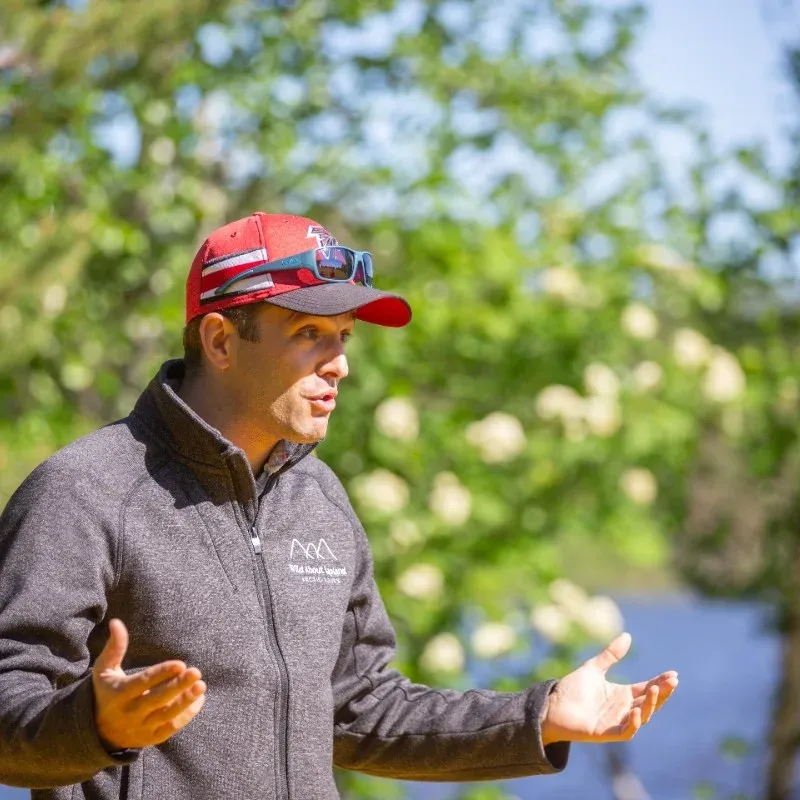
Watch the episode · 38 minutes · 14 chapters
Published 13 June 2026 · 38 minutes · Hosted by Daniel Laurean
Key points
- Silver Birch Resort opened in February 2025 on a 5-hectare private peninsula near Rovaniemi, with five glass cabins and a 32-seat restaurant. Theo Turner plans no more than 10 to 13 cabins, so it never becomes a mass-tourism destination.
- The resort stays open in summer even though summer isn’t profitable, so it can keep its staff on through the year.
- OTAs were essential at launch, but Theo expects commissions and a more crowded market to squeeze small places like his within two to three years.
In this episode
Theo Turner arrived in Finland in 2016 unable to afford a pair of winter boots. Ten years later he runs Wild About Lapland, a tour operator, and Silver Birch Resort, a small lakeside resort near Rovaniemi. He tells Daniel Laurean what running a boutique resort is really like, how he prices against resorts with hundreds of beds, why he still needs OTAs, and what new investors in Lapland keep getting wrong.
Five lessons from building a boutique resort in Lapland
Build on something nobody can copy
Silver Birch sits on a peninsula surrounded by water, with its own private road and cabins raised off the ground. Theo’s plan is to keep it small, so guests experience Lapland rather than a tourist resort.
We want to keep it so it’s small, it’s personal, it’s niche, and that when you’re there, you are actually experiencing Lapland, not a tourism destination.
Theo Turner, 3:49
Stay open to keep your team
Summer loses money, but keeping the resort and the tours open at prices people can afford means Theo can keep staff on permanent contracts instead of rehiring every winter.
I’d rather have it low and have it busy than just having it closed.
Theo Turner, 5:20
Use OTAs to launch, then plan to need them less
A new resort with no market links needs the reach of the big booking sites. Theo expects their commissions, and a busier Rovaniemi, to bite hardest on small properties in the next few years, which is why he invested in his own website early.
Without those strong engines we wouldn’t have received the bookings that we have.
Theo Turner, 11:50
Make every guest feel known
With at most 20 guests, the team knows everyone by name, books their activities and lights the fire at the tepees after dinner. Part of the job is reading when guests want company and when they want privacy.
Every guest who walks through that door in the morning or in the evening, they know the name of the host. The host knows their name.
Theo Turner, 16:58
Build something you’d bring your own family to
Theo sees new, well-funded resorts in Lapland open without a restaurant, leaving guests to pay for taxis into town for dinner. His advice to investors is to think a few years ahead and build the whole experience.
If people are going to be building, first have some insight, look a few years down the line and build a concept that you would be really proud of.
Theo Turner, 26:05
Quotes and the transcript below are lightly edited from the recording: filler words and false starts are left out. Quote times link to the start of the chapter where they appear.
About Theo Turner
Theo Turner founded Wild About Lapland, a tour operator in Rovaniemi, in 2016, and opened its sister company Silver Birch Resort in February 2025. Silver Birch Resort works with Resaco on its website and marketing. Find Theo on LinkedIn.
More on resort marketing
- Resort marketing strategy: from seasonal peaks to year-round revenue
- Boutique hotel marketing: outsmarting chains and OTAs
- Tour operator marketing with Juho Uutela: another Lapland founder on OTAs and direct sales
- All Hospitality Marketing Lab episodes
From the episode
Questions answered in this episode
Not for Silver Birch. Theo says summer is far from profitable, but staying open at lower prices keeps the resort busy and lets him keep his staff on through the year (5:20).
Theo set prices at a similar margin to larger resorts in the region that have far more beds, knowing that as a new resort he is still learning and expects trial and error (10:25).
Build the whole concept, not just the cabins. Theo has seen new places open without a restaurant, so guests pay for a ride into town for every dinner. He suggests building something you would be proud to bring your own family to (26:05).
Everyone defines luxury differently, Theo says. At Silver Birch he sees it as extreme comfort right next to the wild: you can sit in a warm cabin or restaurant and watch nature without feeling its extremes (32:56).
Free 45-minute analysis
Want a second opinion on your resort’s marketing?
We look at your booking data and your website with you and tell you what we would fix first.
Full transcript (lightly edited)
0:00 Intro
Daniel Laurean: Well, Theo, hey, thank you so much for joining us today. This is the third episode of the Resaco podcast. How are you doing today, man?
Theo Turner: Very good, thank you. Yeah, nice to meet you, Daniel. Yeah, let’s go.
Daniel Laurean: Let’s go. So I’ve been looking into a little bit of the history of Silver Birch Resort. I know that it kind of started first from Wild About Lapland. So can you just tell the listeners a little bit about how Silver Birch Resort was born?
Theo Turner: It’s quite a story, so I won’t go too far.
1:36 Meet Theo: Silver Birch Resort and Wild About Lapland
Theo Turner: So Silver Birch Resort is the sister company of Wild About Lapland, and it opened a year ago in February 2025. Wild About Lapland opened in 2016 as a toiminimi, as a self-employed person, and it was only in 2018 that I turned it into an Oy, or a limited liability.
1:57 How Silver Birch Resort was born
Theo Turner: It’s been a long road. You know, when I came to Finland in 2016, I didn’t have two pennies to push together. I couldn’t afford a pair of winter boots. So I ran a tour, bought a pair of boots, ran another tour, bought a set of overalls, and after four years I was able to get my first office and employ front desk, you know, salespersons and stuff. So it’s been a really slow process for me.
In the last four years a few things happened personally which gave me that drive to push a lot harder, which is why we’ve seen a lot of growth. So yeah, Wild About Lapland: eventually, upon finding the right piece of land, I purchased it, I think, in 2022. You know, we found the perfect pocket of land, which was for Wild About Lapland to run all of its tours on, which we did for a year and a half. But then, of course, as soon as we got the land, other opportunities were very clearly available to us. So I had to start pushing. Yeah.
Daniel Laurean: It kind of seems that you identified a gap in the market and it was sort of a timing thing, right? At the moment the area is seeing its tourism boom, right? And while there’s a lot of competition already well established and there’s a lot of newcomers coming up, what is it that makes Silver Birch Resort unique and stand out amongst its competitors?
3:49 What makes the location impossible to replicate
Theo Turner: Well, it’s something you can’t replicate. You know, the location where we are, it’s a 5-hectare peninsula with a 600-metre private road. We’re completely surrounded by water. The cabins are all elevated 4 metres off the ground. And one thing that makes us really stand out is that we won’t ever be a location which is pushing for mass tourism. It’s similar to Wild About Lapland. We want to stay small. We want to go to maximum 10, potentially 13 cabins, but we don’t want enough beds that we get flights just for our resort.
You know, we want to keep it so it’s small, it’s personal, it’s niche, and that when you’re there, you are actually experiencing Lapland, not a tourism destination. Yeah, we’ve had some nice comments from locals saying that Finnish people would visit there, and that is something.
Daniel Laurean: Well, I guess that’s sort of a testament that you’re heading in the right direction.
Theo Turner: Yeah, I hope so. We also had an interesting one from the engineers saying, “You’re going to be fully booked in the summer just from Finnish engineers”: how to build on a swamp.
Daniel Laurean: Yeah, it could be. From the little bit that I know about that particular region, I know that a lot of operators sort of rely heavily on the winter season, whereas Silver Birch Resort is open year round.
5:20 Year-round operations: why Silver Birch stays open in summer
Daniel Laurean: So how is it that you can make a compelling offering that can be attractive year long, when a lot of them are just relying on the winter?
Theo Turner: In Wild About Lapland, we make a big effort to retain our staff throughout the year. So we have a number of people on permanent contracts, and we have another vast number of people that we really want to keep on board throughout the summer. So summer is far from profitable for us. But by keeping the resorts open and keeping the tours at a cost which people can afford in the summer, we get to retain the staff.
So at the Silver Birch Resort, the cost of an overnight stay in the summer is low. But I’d rather have it low and have it busy than just having it closed. So I’ve got a number of staff that can stay on working. It’s good for them, it’s good for us. And we’re such a new concept, the Silver Birch Resort, and I don’t have a hotelier background, so we don’t have all the links in the market yet. So, you know, we kind of have to keep it open as well. And also, I don’t know what else to do in the summer, so we might as well work.
Daniel Laurean: Yeah, that is true. That is true.
Theo Turner: We don’t have an off switch. Yeah.
Daniel Laurean: Well, that’s always a good thing not to have, right? Well, sometimes, if you have a family, right?
Theo Turner: April is a tough one. Six months of the season that we’ve just been through, we hit April and we still want to wake up every day and work, do what I do, but suddenly there’s less to do. So now it moves into the pre-planning for the future years. There’s always something to do. And now with the resort, we have a lot of tree felling that we have to do, a lot of pre-planning for the phase 2 build. There’s a lot of moving parts.
Daniel Laurean: Yeah. I’ve been in the tourism industry maybe since 2010. I was working at a big resort in Mexico, and there were a couple of guys that would talk about the dream to build a small boutique hotel, a luxury boutique hotel. Running one, thinking about it, kind of sounds magical, but what does the business reality actually look like now that you’re doing it?
7:55 The business reality of running a boutique resort
Theo Turner: I don’t know if I should say this, but I will. Everybody thinks it looks really fantastic, and I tell everybody that I’ve built a really shiny cage for myself, and that is kind of how it is. From the outside, of course, it may look like I’ve got a fantastic job, which I have. I’m really grateful for everything that the company’s been able to achieve, but the day-to-day realities and the amount of moving parts required, you know, it’s a lot. It is a lot. We had 50 to 70 staff over the peak period this last winter, with all the areas within Wild About Lapland and the resort.
And any entrepreneur who’s listening to this will understand the amount of moving parts, the amount of variables that one has to observe on a day-to-day basis. It’s testing, and yes, it is very beautiful with those challenges, but, you know, 15 hours a day of constant communication with staff in many areas and everybody outside of the business that is required to make it work. Yeah, you might love it or you might hate it.
Daniel Laurean: Yeah, I mean, definitely those long hours. I think, maybe, I don’t know, and you can tell me if I’m right, but I think the feedback that you get, or the reactions that you get out of your staff, out of the guests that you have, it’s highly rewarding compared to if you were doing some kind of office job just 16 hours a day, right?
Theo Turner: Absolutely, absolutely. I mean, if I can boast anything about my job, it’s that every single day is different. One day I’m felling trees, the next day I’m cleaning mirrors, the next day I’m cleaning toilets, and the day after that I’m talking to ultra-luxury resellers from somewhere, and the next day I’m wearing a suit somewhere else, or I’m flying here, or I’m being told off by staff for not being there enough. You know, it’s incredible, the changes that happen on a day-to-day basis. But that is a massive joy of the job.
10:25 Pricing and positioning against larger competitors
Daniel Laurean: Beautiful. Whenever you think about pricing and positioning, when you’re competing with much larger resorts, how do you manage that? How do you get the right balance, the right pricing for the product that you’re offering?
Theo Turner: It’s very difficult. We’ve come into a market which… So I won’t put any names on the table, but there are resorts in the same region as us which have higher pricing, but they have 500 beds for the peak period, and we have come in at a similar margin to them, understanding that we’re new in the game and understanding that we are laying down kind of our blueprint at the moment, understanding how to get it right, not only for the staff but for the general movement of our guests.
And as we move forward into the conceptualising stage, things will change again. So of course, on large parts, people say you have to know exactly where you’re coming in, but I think, on a very honest side, there’s a lot of trial and error as well.
Daniel Laurean: Yeah, absolutely. I think maybe some of those factors could be… I mean, if we think globally, the hospitality industry is heavily dependent on OTAs, for example, like Booking.com and Airbnb.
11:50 OTAs, Booking.com and the direct booking problem
Daniel Laurean: How do you approach those kinds of things? From the research and the data that we have seen, you know, those bottom lines are just being squeezed by OTAs. I mean, there’s nothing wrong with them. I really think that one can strike a right balance by using those as tools to get discovered by markets that you would probably never have been exposed to. But then relying heavily on them can become a crutch in the long run, especially once the market stabilises in terms of the boom, right?
Right now we’re at the boom. At some point, most likely, that curve is going to sort of flatten, and then the real competition is really going to kick in. Have you taken those things into consideration for setting the right foundation?
Theo Turner: Entering the market, for us it was very important to be with the OTAs. You know, without those strong engines we wouldn’t have received the bookings that we have. But the squeeze and the commissions, and how the market is becoming more saturated, especially in Rovaniemi, it is going to make a big difference in the next two to three years, especially on small places like mine, and how they perform and what we do next. But that’s why we have Resaco.
Daniel Laurean: Touch base a little bit as well. From what I understand, Resaco came into the picture when you were still in the foundational period of getting the resort going. What were the challenges that you were not seeing that perhaps we were able to help you with?
Theo Turner: Well, when we first started up, we had a lot of things going on. The build of the resort was extremely quick. You have to imagine, May 2025, I still hadn’t signed any contracts with developers or for cabins or anything. And we started building in the autumn. It was a very fast move. And then of course the websites had to be done, and the website wasn’t up to scratch, especially from the perspective of what Resaco is saying that we need to have so that it’s performing effectively.
So when Resaco came in, they had a lot of work to assist us in basically having a website that ranked so that we could be competitive. So yeah, as someone who is definitely not a professional in this stuff, we really needed some assistance there. Yeah.
Daniel Laurean: Well, I’m glad to hear that. I think, you know, I’ve been a short period of time in the digital marketing industry, and I do see sometimes that, just like most industries, we kind of have a bad reputation sometimes for not delivering results, right? And I think it comes down to sometimes perhaps not fully understanding the full scope of the industry that we’re trying to serve, right? One thing is posting a pretty nice website, but the other one is really creating a sales-driven engine that has the right CTAs, right?
Theo Turner: And understanding the internet and understanding AI and understanding everything else, all the other moving parts, which will make a huge difference in the next couple of years. You know, Olli, the owner of Resaco, he has a lot of insight into not just the industry, but how to perform. And I wish I’d listened to all of his tips and actually activated them. But, as I was saying, there’s so many variables in your daily tasks. It’s hard for me to start jumping on doing this every day, for example, and making the clips to make the reels to make AI pick you up in whatever domains you need to be.
Daniel Laurean: Yeah. And I think, especially with AI, it’s something that is evolving so fast that you kind of have to be on your toes all the time to see what is changing, and be able to start testing, fail fast, so that you can implement the right strategies. I want to talk a little bit about Silver Birch. What role do storytelling and content play in the marketing, to attract clients, for example?
Theo Turner: Well, we tried to do it quite a lot on social media, but I have to say I don’t know how effective it is, because of course social media gives something for people to follow and to observe and see what we’re up to, but how many people are actually searching on Instagram for their next holiday? Or how many people are typing in what they want into their Google search and then booking it directly there?
16:58 How to reduce OTA dependency as a small resort
Theo Turner: So we try to do, well, we still do, a small storytelling process where, throughout the build of the resort, I’ve just been there telling people how we’re building it, what we’re doing, the steps, the progress. And of course, now it’s built, I’m doing a little bit less of that. But the feedback that I got from local people, from engineers, from other entrepreneurs who had similar plans, it was really nice feedback, ’cause the filming that we did was very honest.
I said to my guy Dom, we do one shot. It’s the first take and we use it, and it’s natural, and it doesn’t matter if people don’t like it or if I fumble my words, you know, let’s make it as human as possible. And people enjoyed it. You know, I was talking about poo tanks and septic tanks and, you know, I’m not a builder, but I learned a lot through the process, and I’ve learned many things that I won’t repeat again.
Daniel Laurean: Yeah. I think you strike on something important. Obviously, for the storytelling element, it has to be honest. It can’t be too curated. People can see right through that, right? And with the social media content, obviously, for the region, there’s a lot of the same thing that everybody’s sort of posting, right? So the storytelling part, some things that I talk about with other resort operators is, well, you know, what is the story that you’re telling people? It’s not just, obviously, the auroras, right?
But rather, you know, what is the feeling that people are getting when they’re interacting with your staff? What are the hospitality nuggets that the staff can see and that they can take advantage of? Sometimes it kind of seems that there’s a lot of a one-size-fits-all kind of approach, whereas, well, you know, now that you’ve been in hospitality, you know that hospitality, it’s one size fits one, right? You have to be able to spot those opportunities in the moment. Whenever somebody overhears somebody talking at the restaurant, “Hey, you know, I’m planning on getting engaged, what should I do?”
There are little opportunities that operators and staff can take advantage of and create genuine moments, so that obviously those then can be promoted, and those come genuinely. And obviously, you know, I’m a big fan of, I don’t know if you know, Will Guidara. He’s the author of Unreasonable Hospitality. He was a restaurant operator in New York, and he talks about how he was able to get to the number one spot in restaurants in the world by doing all the things that perhaps all the other competitors were not doing right at the moment.
So one thing is competing with all competitors on what they’re doing right, but also competing with them on what they’re not doing right. And you talked about that, like, you know, the hospitality thing. So any little thing that we could spot where we could capitalise and make a moment, we use that heavily. ‘Cause, I mean, that’s the truth. You know, maybe people won’t remember what they ate at the restaurant, but they most certainly will remember how you made them feel.
Theo Turner: Absolutely, absolutely. At the resort, we literally have five cabins. So we’ve got two plus two per cabin. So the maximum that will ever happen at the resort at the moment is 20 people, and that’s never happened. I think the most people we’ve had at the resort at one time is 12 guests. We have a restaurant that seats 32 people, and then we have a sofa area. But what it means is every guest who walks through that door in the morning or in the evening, they know the name of the host. The host knows their name.
They ask them how their day was. They ask them how their activity was. They know which activity they did because they booked it for them when they arrived, because they requested assistance. You know, if you’re coming for dinner there, all of our guests know that when the restaurant closes, the hosts will go to the tepees and light the fires for you and take sausages down there for you, and they’ll stay there with you to look for northern lights if you want the company.
A lot of the time the guests would like some company, but what it actually reads is, “Make us feel safe and light the fire, and then please bugger off so we can have some privacy,” you know. And our staff have to understand that and read between the lines, ’cause of course at the Silver Birch Resort, the lights that we have, they only go down the road to where the cabins are. And at 11 p.m. they get dimmed to 20% so that we’re not creating any light pollution for the local area. And then a little bit later on in the night they get turned off completely.
So if there’s any northern lights, you can just step outside your cabin and see them. But it does mean that if you’re on the opposite side of the peninsula, where the tepees are, there’s the best views to the north, there’s no lights there. Obviously, if you know Lapland, it doesn’t matter if there’s no lights; there’s snow on the ground, you can see, it’s very safe. But if you’ve spent your whole life in a big city, you might not feel safe, because, you know, you’re in Lapland. And, you know, this winter as an example, it was a cold, cold winter, 15 to 35 for like two to three months. It was so, so beautiful.
But that’s for the locals who are used to it. If someone’s coming over from Singapore or even from Germany, it’s cold, it’s wild. They know there’s bears, they know there’s wolves, they know there’s wolverines and moose and all that stuff there. So we need to create a safety for our guests. So, you know, we give them head torches, we give them stuff like that that they can use to make their way back if they want it. But our job is to tell the guests what is available and to enable the guests to feel safe. So it’s one of the joys that we can do very easily there, because, like I said, it’s five cabins and a full team of staff dedicated to those five cabins.
23:47 Staffing challenges in a seasonal market
Daniel Laurean: Talk to me about that. How do you train for those skills with your staff so that they can identify those moments?
Theo Turner: Good question. A lot of the time, you know, steel is forged in fire. The guests are coming in. Of course, we have our training periods with the staff, and we sit and we observe and we give feedback throughout the trial periods. We will literally give them the basic training of how to do things. They know how to do things anyway, you would hope, if they’re coming into the hospitality industry. And then it’s just observing and talking after their shifts. You observe and you talk.
Because every encounter that I have with staff when I’m dining, the staff will receive some feedback. And it doesn’t come at you as negative feedback, but it comes at you as, “Next time, if someone presents it like this, maybe we should move this way.” You know, the general flow of a restaurant. And of course, most of the time I’m asked not to try to train people, because I hire professionals who do that for me on site. I call them triple Ts: Turner’s Top Tips. So I love… I’m not obviously trained.
Daniel Laurean: Yeah, that’s brilliant. There’s always something that comes out of the owner’s mind. There’s only so many things that you can see, right? And you have sort of the ultimate vision. So I think it’s always very cool and interesting whenever owners also get involved in that training process, because, you know, you kind of take it from where it comes from, right? Yeah, no, no, it was just a comment. But yeah, it’s very interesting.
I like to ask these questions because, besides me being in digital marketing, one of the things that I always look for when working with people is just the people, you know, the things that you can learn from them and how you can impact their life in one way or another, right? Obviously there’s a lot of ongoing competition coming in now.
26:05 Advice for investors entering the Lapland market
Daniel Laurean: There are new competitors that are sort of capitalising on the high amounts of tourism that the area is receiving. But what could be some of the market lessons that you think they should pay attention to in order to succeed? Succeeding for them, obviously, but also for the better of the region.
Theo Turner: To keep it authentic, effectively. You know, if these new competitors are coming in, and they are coming in with a lot of money in their back pockets and with a lot of investors, a lot of the time they come in and they build something fantastic. And most of the time, what we’re seeing being built in Rovaniemi, the building is generally pretty good and they have good concepts, but it is quite basic in terms of, you know, some places have popped up without restaurants.
It’s just that they are getting started, and the guests then literally just have a cabin to sleep in, and from the cabin they have to spend 40 bucks just to get to the city to get their dinner, to spend more money to get back to the cabin. So I think if people are going to be building, first have some insight, look a few years down the line and build a concept that you would be really proud of, something that you would like to visit with your family, with your kids, something that, you know, you need the whole experience. And the rest of my tips are not for local investors.
Daniel Laurean: Of course, of course, of course. I mean, something a little bit more on the personal level.
27:50 What success means to an entrepreneur
Daniel Laurean: What does success look like to you, both as an entrepreneur and as a person?
Theo Turner: Goodness, that’s a fab question. A couple of years ago, success meant I was financially stable, you know. As a foreign entrepreneur in Finland, I wanted to have stability for me and my family. In the last year or two, I have felt more success in a day in the woods chopping down trees than I have felt from building my whole company. So my understanding of success is changing as the years move forwards. You know, my values are changing. With the more stress I put myself under, my values are changing, basically.
If I can choose between building the company for another five years or spending five years in the forest digging holes and chopping trees, I’d probably go for the latter. Yeah, it’s a really tough one. You know, it’s the ups and downs of daily life, isn’t it? Some days it all feels a little bit too much, and other days I walk into the office and I’m like, “My goodness, I’m surrounded by amazing people and I get to talk to them every day,” you know. And then I drive to the resort and I’m like, “Wow, look at this place. Can’t believe I get to come here and chop down a tree and have lunch and, you know, talk to x amount of people about what we’re going to do next.”
And then the next day, the weight of the world hits my shoulders again, and suddenly I feel like my shoulders aren’t quite wide enough to carry the weight. And it’s all due to one bad night’s sleep, you know. So my idea of success changes quite often.
Daniel Laurean: Yeah, I think it does change for a lot of us, you know, once you start achieving some of the things that you wanted when you were younger. At that particular point, for me, now that I have my family, everything revolves around them. Everything else is just sort of background noise. But yeah, of course, you know, there’s the self-fulfilment part, but just the joy of impacting somebody’s life, for me, it’s maybe my biggest driver, something that I try to lean on every day whenever I can.
You know, a couple of… was it last month? It was my first time ever going to Lapland. I went to Rovaniemi to spend time with Olli, and we toured around some of the properties, some of the resorts. And, you know, I’ve been in Finland for about six years now, and something that struck me about the region is just the community aspect that it has, that I haven’t experienced. I mean, I was just there one day and I felt more welcomed there than I have been in other places here in Finland.
There’s something about the Lappish people that just kind of makes you feel like you’re at home. Is that why you chose the destination?
Theo Turner: It’s not, no. We chose it because my partner at the time was doing her studies up here. But I completely agree with your experience of the people there. They are more international than other regions in Finland. And I don’t know, I’ve lived in Helsinki a little bit, and I understand that no matter where you go, if you’re a foreigner, the local people might feel a little bit inward warming, and that’s normal. It’s normal and it’s fair. And in Rovaniemi the local people understand that an international community is very good.
You know, in my world in Rovaniemi, I know a lot of local people. I’m lucky to have a lot of close friends there. But I also have a massive community of foreign people. And my day-to-day life, I live in an English bubble. You know, we hire people who speak English, and we do business in English, and all of our guests speak English, and sometimes I have to remind myself that I’m in Finland. It’s very interesting like that. That is how international Rovaniemi is, the capital of Finnish Lapland, where there’s more reindeer than people, you know. Yeah.
Daniel Laurean: What is it that you think really makes the region so special, besides the northern lights and the reindeer and Santa Claus? What do you think really is the essence of Lapland that people perhaps don’t fully understand yet?
32:56 What makes Lapland’s nature truly unique
Theo Turner: So there’s a discussion I have quite often about Finland being the happiest country in the world. And obviously, as a foreign guy in Finland who observes the Finns, we make a few jokes about this, because of course, you know, they don’t look overly happy and all the rest of it. But many years ago, I made an observation that when I’ve travelled the world, when I was in Australia or France or Spain, or I was teaching sailing in the south of France, for example, no matter where I was, there was something to observe.
There was a huge amount of life, a huge amount of commotion from wild animals or different flora and fauna and flowers that you’d be observing, and everything was looking outwards. And something that I find very special about Finland is you can sit pretty much anywhere in Lapland, and you can sit for long enough, that nature is beautiful, yes, and there’s things to see, but your attention often turns inwards. And this is why I often say that I think Finns are the happiest people in the world: they get more time looking inwards and resolving matters from within than looking outwards.
And people may agree with me or disagree with me, that’s fine, but it’s one of the things that I’ve observed, and something that I find extremely valuable about the nature there. So when I sit down outside, I can resolve stuff that I otherwise would be less interested in, because I would be entertained by the birds singing or something, you know.
Daniel Laurean: Wow, that’s beautiful. Wow. Yeah, now that I think about it, it is true, you know, there’s something about the nature that you just can’t get in any other place. I’ve been training for an ultramarathon, and I do a lot of my runs in the forest, and just the feeling of being in there, you know, you just can’t get it by running on the road. Theo, is there something that you think is highly important that we haven’t discussed that you think we should discuss?
Theo Turner: If you want to see eagles, come to the resort. Recently, I have to say, when we’re talking about sitting in nature, when I sit at the Silver Birch Resort, no matter where I sit on the resort, you’re pretty much looking out over the water. And the last three weeks, nearly every time that I’ve been there, I’ve seen a golden eagle flying above us. And now the migration is starting and the birds are all moving north. It’s a fantastic time to go and just be fully immersed in nature.
And last thing: all of these fantastic resorts slapping themselves as luxury. Remember that everybody has their own definition of luxury. My definition of luxury is very, very different to yours, I’m sure, Daniel. I still think that I would prefer to be sleeping in a cave and going climbing tomorrow morning. For me, that is luxury: lying around a fire in a cave with my friends and a bottle of rum, and we go climbing the next day.
What I do think is luxury at the Silver Birch Resort is the convenience of extreme comfort measured next to a massive contrast of comfort to wild. And the way that our cabins are fixed and the restaurant is fixed is you can sit in your comfort observing the wild without feeling the extremities of it.
Daniel Laurean: Beautiful. Now I’ve got to check out your place. Next time we go there, I’m going to make sure that Olli and I go and pay you a visit.
37:08 Final thoughts: come see the eagles
Daniel Laurean: Theo, it’s been absolutely great chatting with you today. Thank you so much for joining us today. Where can people keep up with you and with Silver Birch Resort?
Theo Turner: Instagram mostly. So, Silver Birch Lapland.
Daniel Laurean: All right then. Well, thanks again. Theo, it’s been absolutely great. So, people, make sure you check out Silver Birch Resort anytime you come to Finland or to Lapland. Make sure that’s the place you stay. All right then. Thank you, Theo.